
WHAT IS THE BEST CUTTING DISC FOR STAINLESS STEEL?

A New Zealand Fabricator’s Guide
Ask a fabricator what the best cutting disc is and you’ll probably get a brand name.
But brand is only part of the answer.
When cutting stainless steel, the right disc depends on what you are cutting, the thickness of the material, the grinder being used, how much heat you can tolerate and whether speed, precision or disc life matters most.
So what should you actually be looking for?
For most everyday stainless fabrication involving sheet, tube and light section, a thin stainless-compatible cutting disc — often around 1.0 mm — is a very effective starting point.
But there is more to it than simply choosing the thinnest disc on the shelf.
First: make sure the disc is suitable for stainless steel
Stainless steel gets its corrosion resistance from its chemistry and the protective chromium-rich oxide layer on its surface.
Contamination during fabrication can compromise the finished result.
This is why cutting discs intended for stainless steel are commonly formulated with very low levels of iron, sulphur and chlorine. Norton, for example, specifies less than 0.1% of these elements on a number of its stainless/INOX cutting wheels to minimise contamination and subsequent corrosion.
You will frequently see the term:
INOX
on discs intended for stainless applications.
INOX simply comes from the French inoxydable — meaning stainless.
The important point isn't the word printed on the label. It is that the wheel has actually been designed for the material you're cutting.
1.0 mm vs 1.6 mm: which is better?
This is one of the most common questions around cutting discs.
And the answer is:
Neither is automatically better.
They do slightly different jobs.
1.0 mm cutting discs
A thin disc removes less material as it passes through the workpiece.
That generally means:
• A narrow cut • Fast cutting • Less material loss • Less time generating heat in the cut • Cleaner work on sheet, tube and lighter sections
Ultra-thin cutting wheels are specifically designed to provide controlled cuts with minimal material loss. 3M, for example, offers 1.0 mm Cubitron cut-off wheels for applications including stainless tubing and sheet-metal work.
For a fabricator regularly cutting stainless tube or thin section, that can make a noticeable difference over a working day.
1.6 mm cutting discs
Move slightly thicker and you gain more wheel body.
That can provide greater durability and may be preferable where the work is more demanding or where disc life matters more than achieving the narrowest possible cut.
Norton describes its 1.6 mm and 1.9 mm metal/INOX discs as having longer life and being better suited to heavier use than very thin alternatives.
So the decision shouldn't simply be:
“Which disc lasts longest?”
It should be:
“Which disc gives me the best result for this particular cut?”
Why heat matters when cutting stainless
Anyone who works with stainless knows the colour.
Blue.
Purple.
Gold.
Those colours are telling you that significant heat has entered the material.
Heat tint is oxidation caused by elevated temperature. In some applications it will subsequently need to be removed so that the required surface condition and corrosion resistance can be restored.
The practical lesson is straightforward:
Don't turn cutting into grinding.
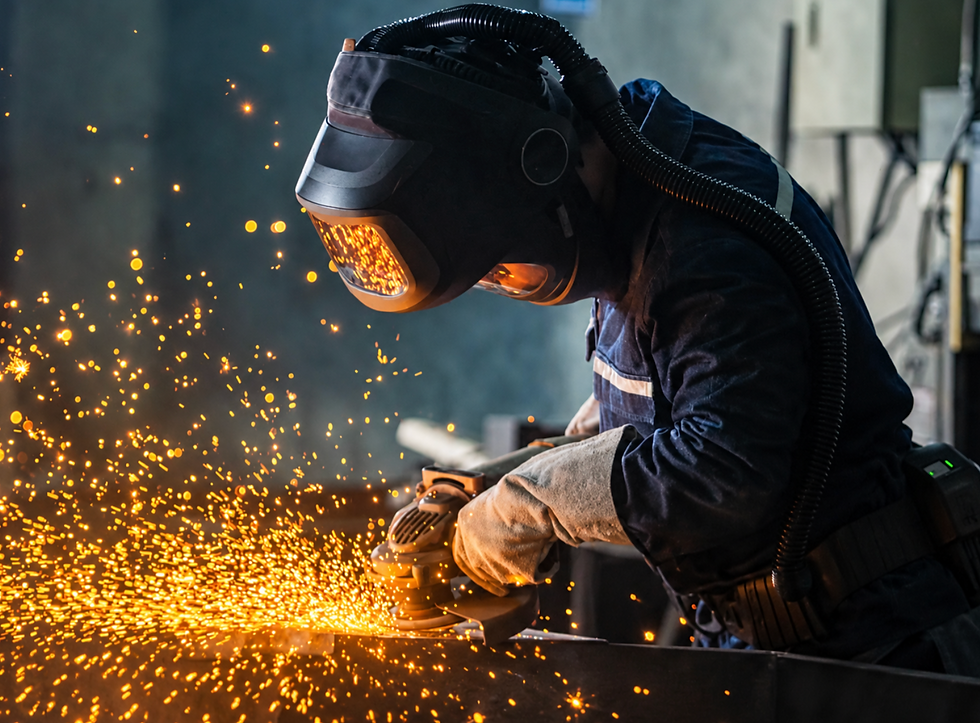
A quality cutting disc should be allowed to cut.
Excessive pressure can generate unnecessary heat, increase operator fatigue and may actually reduce performance.
Modern premium abrasives are increasingly engineered around faster cutting with less required pressure. Abrasive manufacturers put considerable effort into the relationship between grain, bond and how the abrasive fractures during use because it directly affects cutting speed and wheel life.
Why do some cutting discs disappear so quickly?
There is always a trade-off in abrasives.
A wheel that sheds abrasive very readily may stay sharp, but disappear quickly.
A wheel with a bond that holds abrasive too aggressively may last longer physically but eventually become glazed and stop cutting efficiently.
At that point the operator pushes harder.
More pressure.
More heat.
More time.
More fatigue.
And suddenly the disc that looked cheap at the counter isn't particularly cheap anymore.
This is why comparing abrasives purely on price per disc can be misleading.
The number that matters commercially is closer to:
COST PER CUT.
Imagine one disc costs $2 and another costs $3.
The cheaper disc sounds like the obvious choice.
But if the $3 disc cuts considerably faster, completes more cuts and causes fewer wheel changes, the economics can reverse very quickly.
That distinction becomes even more important in a production environment where labour and machine time cost considerably more than the consumable sitting on the grinder.
CHEAP PER DISC. EXPENSIVE PER JOB.
That's the calculation worth making.
Can you use a normal steel cutting disc on stainless?
This needs a more careful answer than simply yes or no.
Some modern wheels are specifically rated by the manufacturer for both steel and stainless steel.
Those products can absolutely be suitable for both materials.
Norton, for example, markets metal/INOX wheels designed for use on steel as well as stainless.
What you should not do is assume that every cutting disc intended for ordinary carbon steel is therefore appropriate for stainless.
Check the manufacturer's stated material compatibility.
If maintaining a clean stainless fabrication process matters, also think beyond the disc itself.
Cross-contamination can come from tools and consumables previously used on carbon steel.
What about 304 vs 316 stainless?
For normal abrasive cutting, the bigger decision is generally not simply whether the material is 304 or 316.
The section being cut, wall thickness, required finish, heat input, grinder power and abrasive specification are often more important to the choice of cutting wheel.
Both are stainless steels, and a quality stainless-rated cutting wheel can generally be selected for applications involving either grade — subject, of course, to the wheel manufacturer's specification.
What should a fabrication workshop look for?
If we were reducing the decision to a simple checklist, we would ask:
Is the wheel specifically rated for stainless steel?
Is the diameter correct for the grinder?
Is the wheel's maximum operating speed appropriate for the machine?
Does the thickness suit the material being cut?
How quickly does it cut?
How long does it last in the real application?
How much pressure does the operator have to apply?
What is the actual cost per completed cut?
That last question is the one that is too often forgotten.
And don't forget how a cutting disc is designed to be used
A thin cut-off wheel is designed to cut using its edge.
It is not a substitute for a grinding disc.
Manufacturers distinguish between cutting wheels and grinding wheels for good reason; guidance for straight cut-off wheels shows them being used perpendicular to the work rather than for face grinding.
Use the correct guard, inspect the wheel before use, wear appropriate eye, hearing and respiratory protection, and never exceed the maximum RPM marked on the wheel.
So what is the best cutting disc for stainless steel?
There isn't one universal answer.
But for everyday fabrication of stainless sheet, tube and lighter section, a quality, thin, stainless-rated cutting disc is usually where we would begin.
For heavier or more demanding work, stepping up in wheel thickness or abrasive technology may produce better durability and economics.
And that is ultimately the point.
Don't choose an abrasive because somebody told you it was cheap.
Don't choose one purely because it has the most recognisable name on the label.
Choose it because it performs properly on your material, your machine and your application.
Then measure what really matters:
How quickly did it do the job? How good was the cut? And what did each completed cut actually cost?
PTA Ltd — Power Tools & Abrasives supplies abrasives, cutting, grinding, finishing and workshop products to engineering, fabrication and metalworking businesses throughout New Zealand.
Comments